If people often ask you to repeat yourself, if you "eat" the ends of your words, or if you finish a sentence and realize nobody quite caught it, I want to start by saying this: you are not alone, and this is fixable.
Talking too fast is not a character flaw. It does not mean you are nervous, rude, or bad at communicating. For a lot of people (me included, for years) it is just a habit that runs on autopilot. I used to talk way too fast. I would race through a thought and watch people's eyes glaze over, and I genuinely had no idea I was doing it. That last part matters more than anything else in this article, so hold onto it.
The good news is that learning to talk slower is a skill. Like any skill, it gets easier with the right practice and the right feedback. Let's walk through why this happens and seven techniques that actually work.
Why do I talk so fast?
There is rarely one single reason. Usually it is a mix:
For some people, fast speech is part of something with a name: tachylalia (simply, an unusually rapid rate of speech), or, when the rate is also irregular and the speech gets hard to follow, cluttering. Researchers like St. Louis and Schulte, and van Zaalen and Reichel, describe cluttering as fast or irregular speech combined with low awareness of how one sounds to listeners. If you are not sure whether your fast talking is just a habit or something more, the difference between cluttering vs stuttering is a helpful place to start.
But here is the key insight that ties all of this together. Most fast talkers genuinely cannot hear their own speed. When you speak, your brain is busy planning what comes next, so it does not have spare attention to monitor how fast the words are leaving your mouth. Specialists call this a monitoring gap. It is not that you do not care. It is that, in the moment, the signal just is not reaching you.
That is why "just slow down" feels impossible. You cannot fix what you cannot feel.
Curious how fast you actually talk? You can take a free 60-second speech-rate test and see your number, no account needed. Most people are surprised.
Typical adult range: 3.5 – 5.0 syll/sec (Jacewicz et al., 2009)
Free, in your browser — speak normally for a few seconds.
Live measurement needs Chrome or Edge on a computer.
How fast is too fast?
Speech rate is usually measured two ways: words per minute (WPM), which is the familiar one, and syllables per second (SPS), which is what speech specialists prefer because it is more precise (it does not care whether your words are long or short).
For reference, comfortable conversational English tends to land somewhere around 150 words per minute, though research on everyday adult speech (Jacewicz and colleagues) shows there is a healthy range, not one magic number. Faster than average is not automatically a problem. Plenty of people speak quickly and are perfectly clear.
So please do not read this as "there is a shame number you must stay under." There is not. The real question is not "how fast am I?" but "can people follow me comfortably?" If you want the details, here is a friendly breakdown of how fast is normal.
7 techniques to talk slower
You do not need all seven. Try a couple, keep what sticks.
The highlighter moves word by word at the target pace — read along aloud and feel your mouth slow down. Change the speed to feel the difference.
Why "just slow down" never works
We have all been told to slow down. It almost never works, and now you know why. The problem was never willpower or effort. The problem is the monitoring gap. You cannot regulate a speed you cannot perceive in the moment.
Think about driving without a speedometer. You could promise yourself all day that you will not speed, but without the dial in front of you, you would drift right back to your habit on the first open road. Speech is the same. You need a speedometer for your voice. That is what feedback gives you, and it is exactly why van Zaalen and Reichel emphasize self-monitoring and feedback as central to changing fast or cluttered speech.
Once you can see your rate, "slow down" turns from a vague wish into a concrete, doable adjustment.
A simple daily routine
You do not need an hour. Five minutes a day, done consistently, beats a marathon session once a month. Consistency is what rewires a habit.
Here is what a week might look like:
| Day | 5-minute practice |
|---|---|
| Mon | Read a paragraph aloud, pausing at every period |
| Tue | Same paragraph, watching your live rate |
| Wed | Record a 1-minute "how was my day," listen back |
| Thu | Free talking while watching the gauge |
| Fri | Read aloud, focus on finishing word endings |
| Sat | Free talking, aim for steady breath |
| Sun | Rest, or a relaxed chat with the gauge on |
The goal is not to crawl. The goal is to find a pace that feels a touch slow to you and just right to everyone else, and to make that pace your new normal.
Measure a speech rate in 10 seconds.
There is an easier way. Try Talk Slower for free.
Test my speech rate for freeWhen to see a speech-language pathologist
Self-practice helps a lot of people. But if your fast speech is persistent, if it genuinely gets in the way at work or socially, or if it looks like it might be cluttering (rapid plus irregular, with that low-awareness piece), it is worth talking to a professional. A speech-language pathologist can give you a professional assessment and a plan tailored to you.
And these are not either-or. Talk Slower is designed to work alongside your speech-language pathologist, giving you something concrete to practice between sessions. If you want to compare options, here is an honest look at choosing the right practice app.
Frequently asked questions
Why do I talk so fast even when I try not to?
Because trying is not the same as seeing. In the moment your brain is planning ahead and cannot also monitor your speed, so you snap back to your habitual pace. Real-time feedback closes that gap by showing you your rate as you speak.
Is talking fast a sign of anxiety?
It can be, but not always. Anxiety, excitement, and habit can all speed you up, and for some people it is tachylalia or cluttering. Fast on its own is not a diagnosis. What matters is whether your listener can follow you comfortably.
How fast is too fast when speaking?
There is no single shame number. Conversational English often sits around 150 words per minute, with a wide normal range. The better question is whether people can follow you comfortably, not whether you beat a target.
Can I really teach myself to talk slower?
Yes. Many people make real progress with daily practice and feedback. Pausing, breathing, reading aloud, and watching your live rate are all skills, and skills improve with repetition.
What is SPS and why use it?
SPS means syllables per second. Speech specialists prefer it to words per minute because it measures speaking rhythm more precisely, independent of how long or short your words are.
When should I see a speech-language pathologist?
If your fast speech is persistent, hurts you socially or at work, or looks like cluttering (rapid and irregular with low self-awareness), an assessment is worth it. A speech-language pathologist can confirm what is going on and build a plan, and Talk Slower works alongside them.
In short
Talking too fast is common, it is not a flaw, and it is absolutely changeable. Pause on purpose, finish your words, breathe, and above all, find a way to see your speed, because the reason "slow down" never worked is that you could not feel how fast you were going. Give your voice a speedometer and the rest follows.
Ready to try it? Take the free speech-rate test to see your number, then start practicing free and watch your pace settle, one short session at a time.
Further reading:
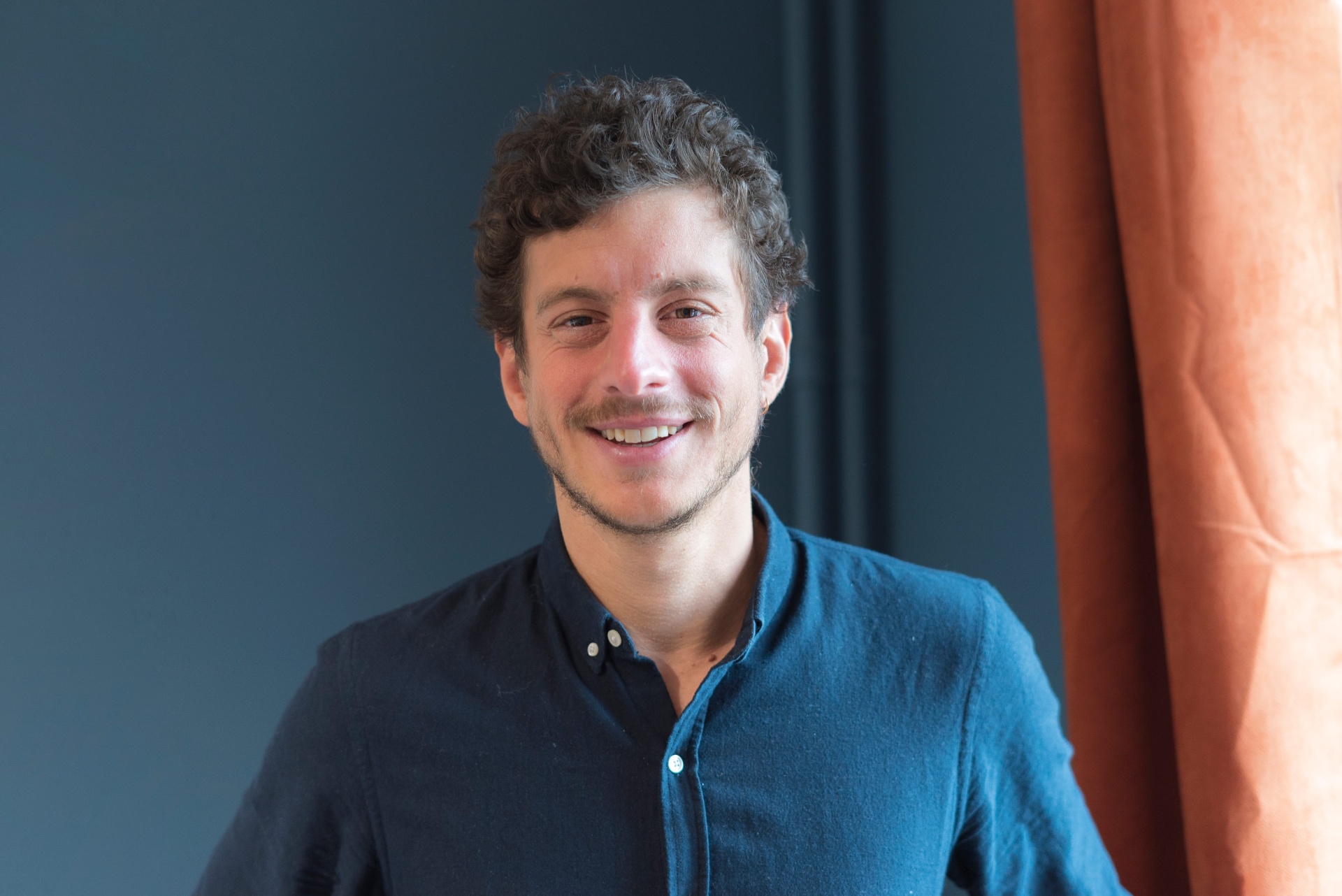
Clément — Founder of Talk Slower
I cluttered for over 20 years without knowing it. In 2022, a speech-language pathologist who specializes in fluency helped me understand and work on my speech rate. That journey is what led me to build Talk Slower, the tool I wish I'd had from the start.
Take action
Don't stop at theory. Test your speech rate and start training right now. It's free.
Test my speech rate for free